
Applications & IdeasEvent Lighting SetupWireless DMX Lighting
2026年4月2日
The Best Wireless DMX Controllers for Battery-Powered Uplighting Systems: Tablet-Based Apps vs. Hardware Consoles
The Best Wireless DMX Controllers for Battery-Powered Uplighting Systems: Tablet-Based Apps vs. Hardware Consoles In the rapidly evolving world of event production, the "Control Gap" is a frequent sou
The Best Wireless DMX Controllers for Battery-Powered Uplighting Systems: Tablet-Based Apps vs. Hardware Consoles
In the rapidly evolving world of event production, the "Control Gap" is a frequent source of friction. On one side, you have the agility of tablet-based apps; on the other, the precision of a dedicated hardware console. For a battery par light factory, our job is to ensure that whether you are using an iPad or a GrandMA3, our wireless battery par lights respond with zero latency and 100% reliability.
Choosing the right controller isn't just about the budget—it’s about the workflow. Here is our 2026 analysis of which control system fits your specific event profile.
Google Search Snippet: App Control vs. DMX Console for Battery Lights?
The choice between Tablet-Based Apps and Hardware DMX Consoles depends on event scale and fixture diversity. App Control (Bluetooth/Wi-Fi) is ideal for small-to-mid weddings and corporate dinners where labor costs must be minimized and only uplights are used. Hardware Consoles with Wireless DMX (CRMX/W-DMX) are essential for large-scale productions involving moving heads and synchronized stage cues, where a professional lighting designer (LD) requires tactile control and complex programming sequences.
1. Tablet-Based Apps: The "Fast & Lean" Workflow
For many wholesale battery par light buyers, the primary goal is "Load-in to Glow-in" under 15 minutes.
- Best For: Small weddings, boutique retail launches, and private parties.
- The Labor Advantage: You don't need a highly-paid LD. A lead technician can set the color palette in minutes using a smartphone or iPad.
- Integrated Ecosystems: Our LumiUp Flex series features an integrated Bluetooth-to-DMX bridge. You only need one "Master" light to talk to your phone; it then broadcasts the signal to the rest of the fleet via 2.4G wireless.
When App Control Wins:
- Limited Setup Time: When you only have 30 minutes before the guests arrive.
- Budget Constraints: When the client cannot afford a $1,000/day lighting programmer.
- Static Ambiance: When the lights only need to change color once or twice during the night (e.g., from Dinner Amber to Party Purple).
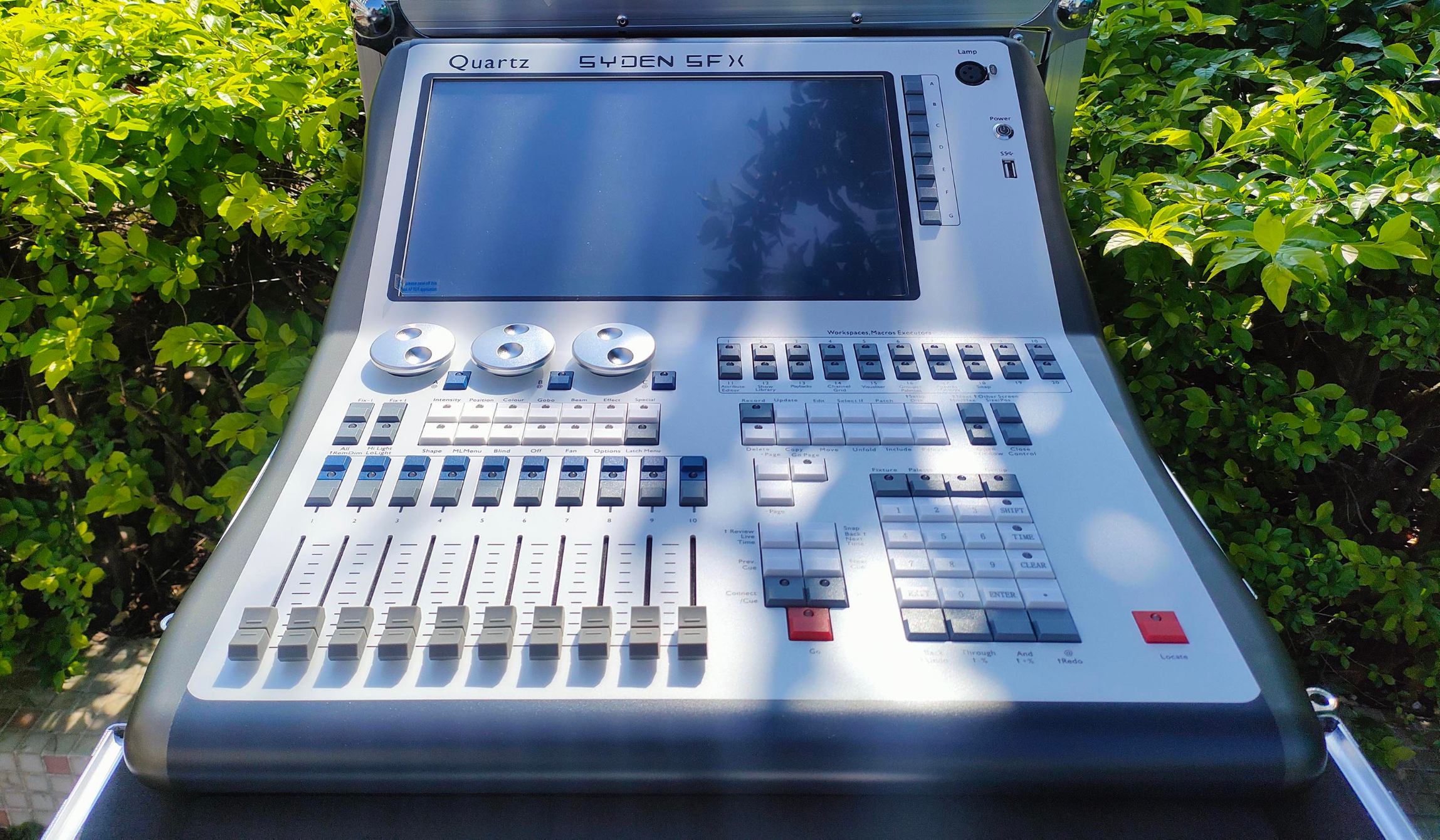
2. Hardware Consoles: The Professional "Nerve Center"
As events scale, the limitations of an app become clear. When you introduce Moving Heads (Wash/Spot/Beam), atmospheric effects (Haze/Fog), and time-coded shows, a hardware console is non-negotiable.
- Best For: Festivals, high-end corporate galas, fashion shows, and touring concerts.
- Tactile Feedback: A professional LD needs physical faders to "busk" a show. You cannot feel a glass screen during a high-energy dance set.
- Multi-Fixture Programming: Moving heads rarely have reliable Bluetooth apps. By using a Wireless DMX Transmitter (like a LumenRadio Stardust) connected to your console, you can sync your battery-powered stage lights perfectly with your moving lights.
3. Critical Scenarios: Where Wireless DMX is Mandatory
Beyond just "Large Events," certain scenarios make a dedicated Wireless DMX (CRMX/W-DMX) setup from a battery par light factory essential:
A. The "Hybrid" Rig (Moving Heads + Uplights)
If your rig includes moving lights, they speak DMX. Trying to run an app for your uplights and a console for your moving heads is a recipe for a "disjointed" show. A single wireless DMX universe ensures Color Unity across the entire room.
B. Architectural Integration (Master/Slave at Scale)
In venues like cathedrals or large museums where lights are placed 50 meters apart, Bluetooth apps often lose signal. Professional Wireless DMX has a range of 200m–500m and uses FHSS (Frequency Hopping) to punch through Wi-Fi interference.
C. Live "Busking" and High-Energy Transitions
If the music tempo changes or a VIP enters the room, you need an instant transition. Apps often have a 100-200ms lag. A battery par light manufacturer optimizing for DMX ensures that when you hit "Flash" on the console, the lights react at the speed of thought.
4. The Hidden Costs: Labor vs. Gear
A professional Lighting Designer is a significant expense. However, for a wholesale battery par light distributor, recommending the right control system can save the client money in the long run.
Feature | Tablet App Control | Pro DMX Console + Wireless |
Initial Investment | Low ($0 - $100 for App) | High ($2,000 - $15,000+) |
Setup Time | Ultra-Fast | Moderate (Patching required) |
Programming Depth | Basic (Colors/Chases) | Infinite (Effects/Timecode) |
Reliability | Good (Line of sight) | Highest (Pro-grade RF) |
Best Personnel | General Tech | Professional LD |
5. 2026 Trend: The "Bridge" Solution
We are seeing a rise in PC-Based DMX Software (like MA onPC or Wolfmix). These offer the power of a console with the portability of a laptop. By plugging a USB-to-DMX interface into a wireless transmitter, you get professional-grade control for your battery par light factory fixtures without the bulk of a full-size console.
Conclusion: Matching Tools to the Task
The "Best" controller is the one that fulfills the contract with the least friction.
- Use App Control to win the high-volume, low-margin wedding business.
- Invest in Wireless DMX Consoles to win the high-stakes, high-margin corporate and touring contracts.
At LumiUp, we ensure our wholesale battery par lights are "Control Agnostic"—they are designed to be the most reliable slaves to whatever master you choose.
[Request a Compatibility List for Major DMX Controllers] or learn how to set up a Master/Slave wireless rig in 3 minutes on our technical blog.