
Applications & IdeasWireless DMX LightingBattery Par LightsBattery Uplights
2026年4月2日
Why Most Battery Uplights Fail at Professional Events
Why Most Battery Uplights Fail at Professional Events And How to Choose Ones That Actually Work When It Matters The Problem No One Talks About On paper, most battery uplights look the same. RGB color
Why Most Battery Uplights Fail at Professional Events
And How to Choose Ones That Actually Work When It Matters
The Problem No One Talks About
On paper, most battery uplights look the same.
RGB colors.
Wireless control.
Battery-powered convenience.
But in real events?
They fail—quietly, unpredictably, and sometimes at the worst possible moment.
- Colors don’t match across fixtures
- Wireless signals drop mid-show
- Batteries die before the event ends
- Outdoor conditions expose weaknesses instantly
And when that happens, it’s not just a technical issue.
👉 It’s your reputation on the line.
What Professionals Actually Need (But Most Uplights Don’t Deliver)
This is where the gap is.
Most uplights are designed to sell quickly.
Very few are designed to perform consistently under pressure.
Let’s break down the real-world failure points—and what separates reliable fixtures from risky ones.
1. When Color Accuracy Fails, Everything Looks Cheap
You don’t notice bad color in a warehouse test.
You notice it when:
- A bride’s dress looks slightly green in photos
- Skin tones appear unnatural under uplighting
- White light isn’t truly white
This isn’t a minor issue. It directly impacts:
👉 Photography quality
👉 Client satisfaction
👉 Your brand perception

What to prioritize instead:
- High CRI (≥95) for true color rendering
- High TLCI for camera consistency
- Stable color output across all fixtures
2. “Wireless DMX” That Breaks When You Need It Most
Many uplights claim wireless control.
But in real environments—crowded RF signals, metal structures, multiple devices—
most systems start to struggle.
What that looks like during an event:
- Lights respond late or inconsistently
- Scenes don’t trigger properly
- Some fixtures lose connection entirely
That’s not acceptable in a live production environment.
[Image Placeholder]
Scene: Event lighting setup with multiple fixtures synced vs desynced lighting cues
What reliable systems use:
- Proven wireless protocols (CRMX-level stability)
- Strong signal penetration
- Fast, stable pairing across multiple fixtures
Suggested External Authority Links:
- LumenRadio CRMX Official Technology Page
- Guide to RF Interference in Event Lighting
3. Battery Life That Doesn’t Survive Real Events
Spec sheets say “up to 10–12 hours.”
Reality says:
👉 That’s rarely at full output.
Now consider:
- Weddings: 8–12 hours
- Corporate events: full-day setups
- Outdoor events: no charging access
One fixture dying early breaks visual consistency instantly.
What professionals actually need:
- Real runtime that matches event duration
- Battery monitoring (display or app-based)
- Consistent output—not brightness drops over time
4. Outdoor Events Separate Real Fixtures from Marketing Claims
Indoor demos don’t tell the full story.
Outdoor environments do.
Common issues with lower-grade uplights:
- Rain causes shutdowns
- Dust affects performance over time
- Cooling fans introduce unwanted noise
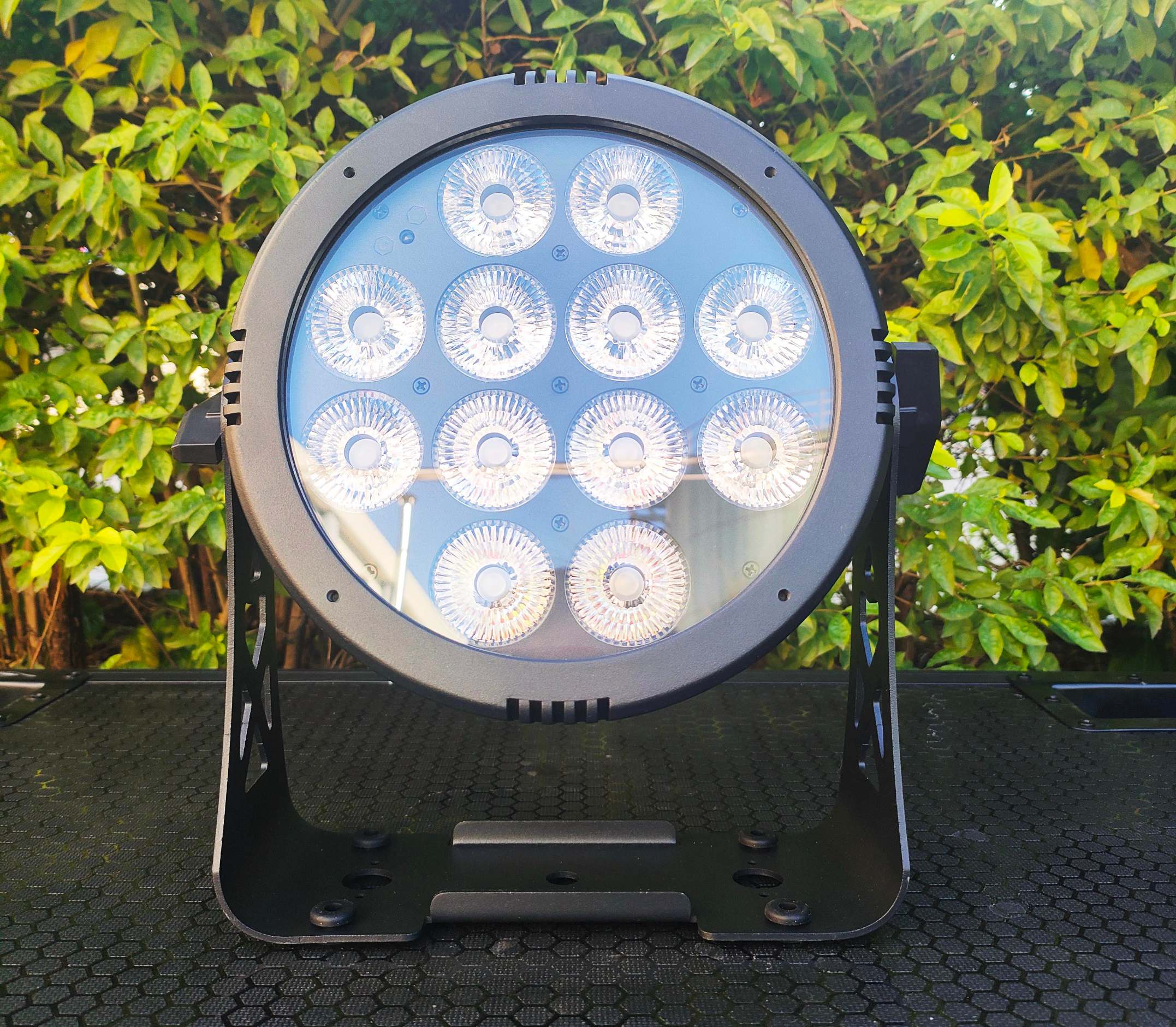
What to look for:
- IP65 rating for weather resistance
- Fanless cooling for silent operation
- Rugged housing for long-term durability
5. One Fixture, One Look = Low ROI
This is where many buyers lose money long-term.
Basic uplights:
- Do one job
- Create one look
- Limit your creative options
But your clients don’t want one look.
They want:
👉 Different moods
👉 Different styles
👉 Different event atmospheres
[Image Placeholder]
Scene: Same venue transformed with different lighting styles using filters and accessories
What increases ROI:
- Modular accessories (filters, domes, diffusers)
- Flexible beam shaping
- Multi-purpose use across event types
The Real Difference: Reliability vs Risk
At this level, you’re not choosing between products.
You’re choosing between:
- Consistent performance
- or
- Unpredictable failure
Most uplights meet the minimum requirement.
Very few are built to eliminate risk.
A Smarter Approach to Choosing Battery Uplights
Before you invest, ask:
- Will these lights perform consistently across all fixtures?
- Is the wireless system proven in real event environments?
- Can the battery last through a full event—without compromise?
- Are they built for outdoor conditions, not just indoor demos?
- Will this fixture increase my flexibility—or limit it?
If you hesitate on any of these, it’s worth reconsidering.
Built for Professionals Who Can’t Afford Failure
At batteryuplight.com, the focus isn’t just on features.
It’s on eliminating the common failure points professionals deal with every day:
- Color inconsistency
- Wireless instability
- Battery uncertainty
- Limited usability
The goal is simple:
👉 Give you fixtures you don’t have to think about during an event
Because when lighting just works,
you can focus on everything else that matters.
Ready to Upgrade Your Uplighting Setup?
If you’re currently dealing with:
- unreliable wireless control
- inconsistent color output
- battery limitations
- or low flexibility
it may be time to move to a more professional-grade solution.
👉 Explore our full range of battery uplights
👉 Request pricing for bulk orders or OEM projects
👉 Talk to our team about your specific event requirements